What does a procurement department actually do?
Many people think procurement simply means:
Get a quotation → negotiate the price → place a purchase order.
That is only one part of procurement.
A modern procurement function is responsible for much more.
Procurement helps the organization understand its requirements, identify suppliers, evaluate alternatives, negotiate commercial terms, manage contracts, monitor deliveries, control costs, manage supplier relationships and reduce supply risks.
In many organizations, procurement also contributes to:
Therefore, understanding procurement functions is essential for anyone working in procurement, purchasing, supply chain, finance, operations or supplier management.
In this article, we will explain the 12 key functions of procurement, with practical examples and a clear distinction between strategic and operational procurement activities.
Procurement functions are the activities and responsibilities performed by a procurement team to acquire goods, services and resources required by an organization while achieving the required cost, quality, delivery, risk and business objectives.
In simple terms:
Procurement objectives explain what procurement wants to achieve, while procurement functions explain what procurement does to achieve those objectives.
For example:
Objective: Reduce total procurement cost.
Functions that support it:
This distinction helps organizations design better procurement processes and assign responsibilities clearly.
A procurement department sits at the intersection of several business functions.
It may need to coordinate with:
If procurement functions are poorly defined, organizations can experience:
Clearly defined procurement functions create accountability and help the organization move from reactive purchasing toward structured procurement management.
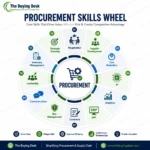
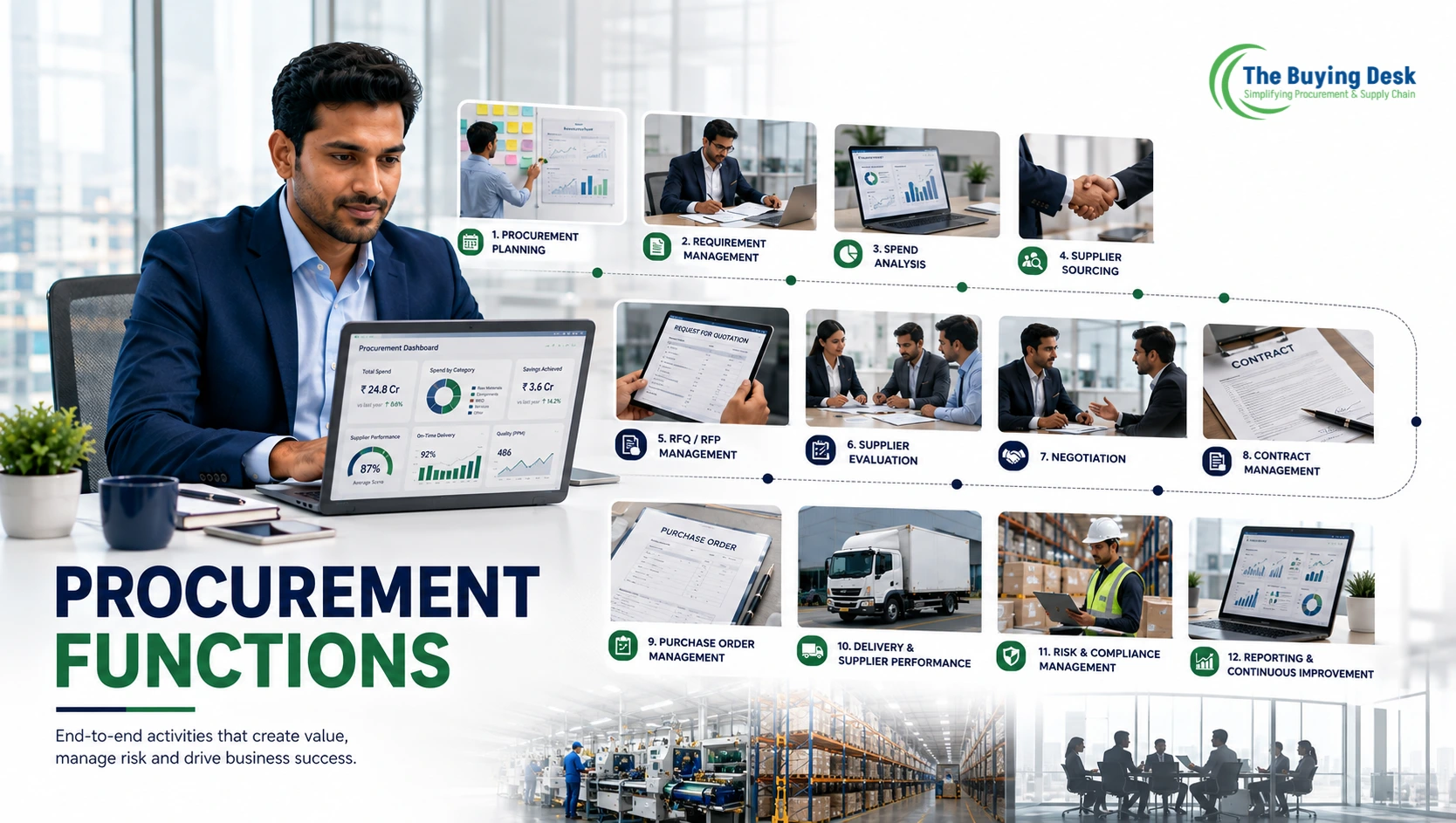
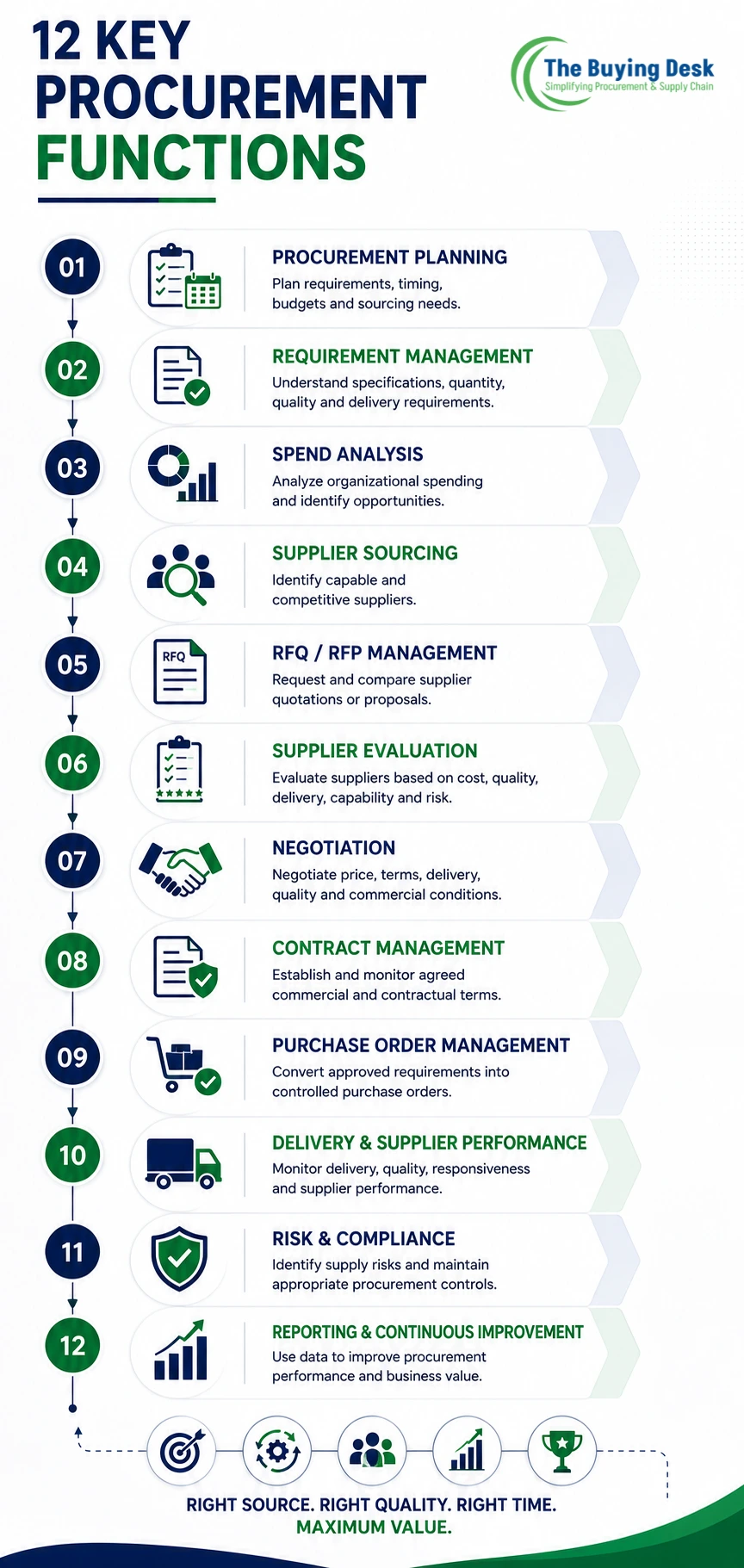
The major procurement functions include:
Let’s examine each function in detail.
Procurement planning is one of the most important procurement functions.
Before purchasing anything, procurement should understand:
Procurement planning connects business requirements with sourcing and purchasing activities.
A manufacturing company expects production to increase by 20% next quarter.
Procurement should not wait until materials become short.
It should work with planning and operations to understand:
This allows procurement to prepare the supply base before demand increases.
Procurement cannot purchase effectively if the requirement itself is unclear.
Requirement management involves understanding exactly what the business needs.
This may include:
Instead of asking a supplier:
“Please quote for a motor.”
A better requirement might specify:
A clear requirement makes supplier comparison easier and reduces misunderstandings.
Procurement may not define the technical specification itself.
Engineering, Quality, IT or another specialist department may own the technical requirement.
However, procurement should ensure that the requirement is sufficiently clear for sourcing and commercial evaluation.
Spend analysis means studying where and how the organization spends money.
Procurement may analyze spending by:
Suppose a company discovers that it purchases similar packaging materials from 15 different suppliers.
Procurement may identify an opportunity to:
Without spend visibility, these opportunities may remain hidden.
Spend analysis is therefore an important foundation for strategic sourcing.
Supplier sourcing is the process of identifying potential suppliers capable of meeting business requirements.
Sources may include:
The objective is not simply to find the cheapest supplier.
Procurement should look for suppliers that can provide the required combination of:
A company needs a new component that its existing suppliers cannot produce.
Procurement may identify several potential suppliers and then work with Engineering and Quality to determine which suppliers are technically and commercially suitable.
Once suitable suppliers have been identified, procurement may request commercial or technical proposals.
Common sourcing documents include:
Generally used when the requirement is relatively well-defined and suppliers are primarily being asked to provide pricing and commercial terms.
Used when suppliers are expected to propose a solution, approach or broader commercial offering.
Used to gather information about suppliers, capabilities, technologies or market solutions before a formal sourcing exercise.
A clear RFQ helps procurement compare suppliers on a consistent basis.
Receiving quotations is not the end of sourcing.
Procurement must evaluate suppliers against relevant criteria.
A supplier evaluation may consider:
| Evaluation Area | Example Considerations |
|---|---|
| Commercial | Price and payment terms |
| Quality | Quality history and systems |
| Delivery | Lead time and OTD capability |
| Capacity | Production capability |
| Technical | Product/process capability |
| Financial | Business stability |
| Service | Responsiveness |
| Risk | Supply continuity |
| Compliance | Required certifications and standards |
| Innovation | Improvement capability |
For important categories, organizations may use a weighted supplier evaluation.
For example:
The exact weights should reflect the importance of the category.
A critical safety component should not necessarily be evaluated using the same criteria as routine office supplies.
Negotiation is one of the most visible procurement functions.
However, procurement negotiation should not be limited to asking:
“Can you reduce your price?”
Commercial negotiation can cover:
A supplier offers:
₹100 per unit
Procurement may negotiate:
The final value created may therefore be greater than the price reduction alone.
Good procurement negotiation creates value for both the buyer and supplier while protecting the organization’s interests.
Once commercial terms have been agreed, they may need to be formalized through a contract, purchase agreement, framework agreement or other appropriate commercial document.
Contract management may include:
But contract management does not end after signing.
Procurement should also monitor whether the agreed terms are actually being followed.
A contract specifies:
Payment term: 60 days
But invoices are repeatedly being processed under different terms.
That creates commercial leakage.
Similarly, a contract may specify a particular price but purchase orders may be placed at higher prices.
Contract management helps prevent such gaps.
The purchase order, commonly called a PO, converts an approved purchasing requirement into a formal order to the supplier.
A purchase order may contain:
The PO creates clarity between buyer and supplier and supports downstream receiving and payment processes.
Procurement’s responsibility does not end when the PO is released.
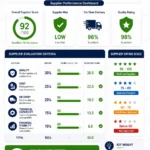
Supplier performance needs to be monitored.
Typical supplier performance indicators include:
Suppose a supplier’s OTD performance is:
January: 96%
February: 94%
March: 87%
April: 81%
A procurement team should not simply record the numbers.
It should investigate the reason for deterioration.
Possible causes could include:
Then procurement can work with the supplier and internal stakeholders on corrective actions.
Procurement decisions can expose organizations to financial, operational and supply risks.
Therefore, risk management is an important procurement function.
Procurement may:
Compliance is another part of this function.
Procurement may need to ensure adherence to:
The exact controls depend on the organization’s industry and governance structure.
Procurement needs data to understand performance.
Important reports may cover:
Without data, procurement decisions become reactive.
With good data, procurement can identify:
Procurement should regularly ask:
What can we do better?
Examples include:
Continuous improvement turns procurement from a transaction-processing function into a performance-driven function.
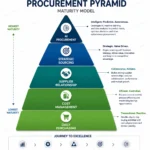
Not every procurement activity has the same level of strategic importance.
It is useful to divide procurement work into two broad areas.
Operational procurement focuses on executing day-to-day purchasing activities.
Examples:
Strategic procurement focuses on long-term value creation.
Examples:
A mature procurement organization needs both.
Operational procurement keeps the business running today.
Strategic procurement prepares the business for tomorrow.
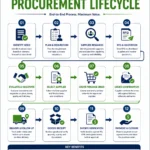
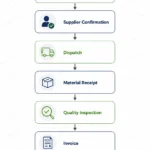
The procurement functions can also be viewed as a complete flow:
Business Requirement
↓
Procurement Planning
↓
Requirement Definition
↓
Spend Analysis
↓
Supplier Sourcing
↓
RFQ / RFP
↓
Supplier Evaluation
↓
Negotiation
↓
Contract
↓
Purchase Order
↓
Delivery
↓
Inspection / Acceptance
↓
Invoice / Payment
↓
Supplier Performance
↓
Continuous Improvement
This demonstrates that procurement is not a single activity.
It is a connected business process.
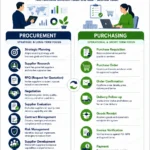
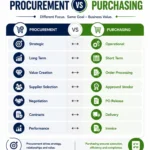
Procurement and purchasing are related, but they are not always identical.
Purchasing generally focuses more on the transactional act of buying.
Procurement typically covers a broader range of strategic and operational activities.
| Purchasing | Procurement |
|---|---|
| Purchase orders | Strategic sourcing |
| Order processing | Supplier strategy |
| Price comparison | Total cost analysis |
| Delivery follow-up | Supplier development |
| Transaction management | Contract management |
| Buying | Risk management |
| Short-term focus | Long-term value |
This does not mean purchasing is less important.
Purchasing is an important component of procurement.
The difference is primarily in scope and strategic responsibility.
Consider a manufacturing company that needs a new aluminium component.
Engineering defines the required specification.
Procurement understands expected annual demand.
The team estimates the category’s total spend.
Procurement identifies capable suppliers.
Qualified suppliers receive the commercial requirement.
Suppliers are evaluated on:
Procurement negotiates the commercial package.
The agreed terms are documented.
The first order is released.
Procurement monitors supplier delivery.
The supplied component is inspected.
The supplier’s performance is monitored over time.
Procurement works with the supplier to improve cost, quality and delivery.
This is procurement functioning as an integrated business process.
Procurement rarely works alone.
For:
For:
For:
For:
For:
For:
This cross-functional nature is one reason procurement has become increasingly important in modern organizations.
Technology can support almost every procurement function.
Examples include:
The objective of technology should be to improve:
Technology should support procurement professionals rather than simply digitize inefficient processes.
Procurement functions should be connected to measurable performance.
| Procurement Function | Example KPI |
|---|---|
| Procurement Planning | Plan adherence |
| Requirement Management | Requirement completeness |
| Spend Analysis | Spend visibility % |
| Sourcing | Sourcing cycle time |
| RFQ Management | RFQ response rate |
| Supplier Evaluation | Qualified supplier coverage |
| Negotiation | Savings / value contribution |
| Contract Management | Contract compliance |
| PO Management | PO cycle time |
| Delivery Management | Supplier OTD |
| Quality Management | Supplier defect rate |
| Risk Management | Critical suppliers with mitigation plans |
| Reporting | Report accuracy / timeliness |
The exact KPI definitions should be aligned with the organization’s processes and data systems.
PO creation is important, but it is only one part of procurement.
If procurement is involved only after the specification and supplier have already been decided, opportunities for cost and risk optimization may be lost.
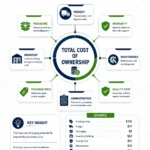
Procurement decisions should consider total value.
Supplier management should continue after the sourcing decision.
Without accurate spend and supplier data, strategic decisions become difficult.
Manual processes consume time and increase the risk of errors.
Procurement needs strong collaboration with technical and operational teams.
A strong procurement organization can be built around seven foundations:
Everyone should know who owns each procurement activity.
Procurement should have defined workflows.
Spend, supplier and performance data should be reliable.
Supplier capability should be evaluated and developed.
Procurement professionals need negotiation and analytical capability.
Digital tools should improve visibility and efficiency.
Processes and supplier performance should be reviewed regularly.
Use the following checklist to assess your procurement organization.
☐ Are procurement requirements planned in advance?
☐ Are critical long-lead items identified?
☐ Are specifications clear?
☐ Are stakeholders aligned before sourcing?
☐ Do we have a structured supplier sourcing process?
☐ Do we maintain qualified supplier options?
☐ Are quotations compared consistently?
☐ Are negotiations based on data?
☐ Are suppliers evaluated before selection?
☐ Is supplier performance monitored after award?
☐ Are important commercial terms documented?
☐ Is contract compliance monitored?
☐ Are purchase orders properly controlled?
☐ Are supplier acknowledgements tracked?
☐ Are critical suppliers identified?
☐ Are mitigation plans available for major supply risks?
☐ Are procurement KPIs reviewed regularly?
☐ Are improvement actions tracked?
Procurement is much broader than simply buying products.
The major procurement functions include:
The strongest procurement organizations connect these functions into one integrated process.
The ultimate goal is not simply to place orders.
It is to ensure that the organization receives the right value, quality, supply reliability and commercial outcome while managing risk and supporting business objectives.
What are the main functions of procurement?
The main functions include procurement planning, requirement management, spend analysis, sourcing, RFQ/RFP management, supplier evaluation, negotiation, contract management, purchase order management, supplier performance, risk management and procurement reporting.
What is the most important procurement function?
There is no single function that is always the most important. The priority depends on the business and category. Strategic sourcing, supplier management, cost optimization, risk management and operational purchasing may all be critical in different situations.
What is the difference between procurement functions and procurement objectives?
Procurement objectives describe what procurement wants to achieve. Procurement functions describe the activities performed to achieve those objectives.
Is purchasing a procurement function?
Yes. Purchasing is generally considered an important component of procurement, particularly the transactional activities involved in ordering and receiving goods or services.
What does strategic procurement do?
Strategic procurement focuses on long-term value through sourcing strategy, supplier management, cost optimization, risk management, contracts, market intelligence and business alignment.
What does operational procurement do?
Operational procurement handles day-to-day activities such as purchase orders, delivery follow-up, supplier communication, documentation and transaction processing.
Why is supplier evaluation important?
Supplier evaluation helps organizations select suppliers based on factors such as cost, quality, delivery, capacity, technical capability, risk and compliance rather than price alone.
Why is spend analysis important?
Spend analysis helps procurement understand where money is being spent and identify opportunities for consolidation, negotiation, standardization and cost optimization.
How does procurement contribute to risk management?
Procurement can identify critical suppliers and categories, assess supply risks, develop alternate sources and establish appropriate mitigation strategies.
How does procurement support business growth?
Procurement can support growth by securing supply capacity, developing suppliers, improving cost competitiveness, supporting innovation and reducing supply disruptions.