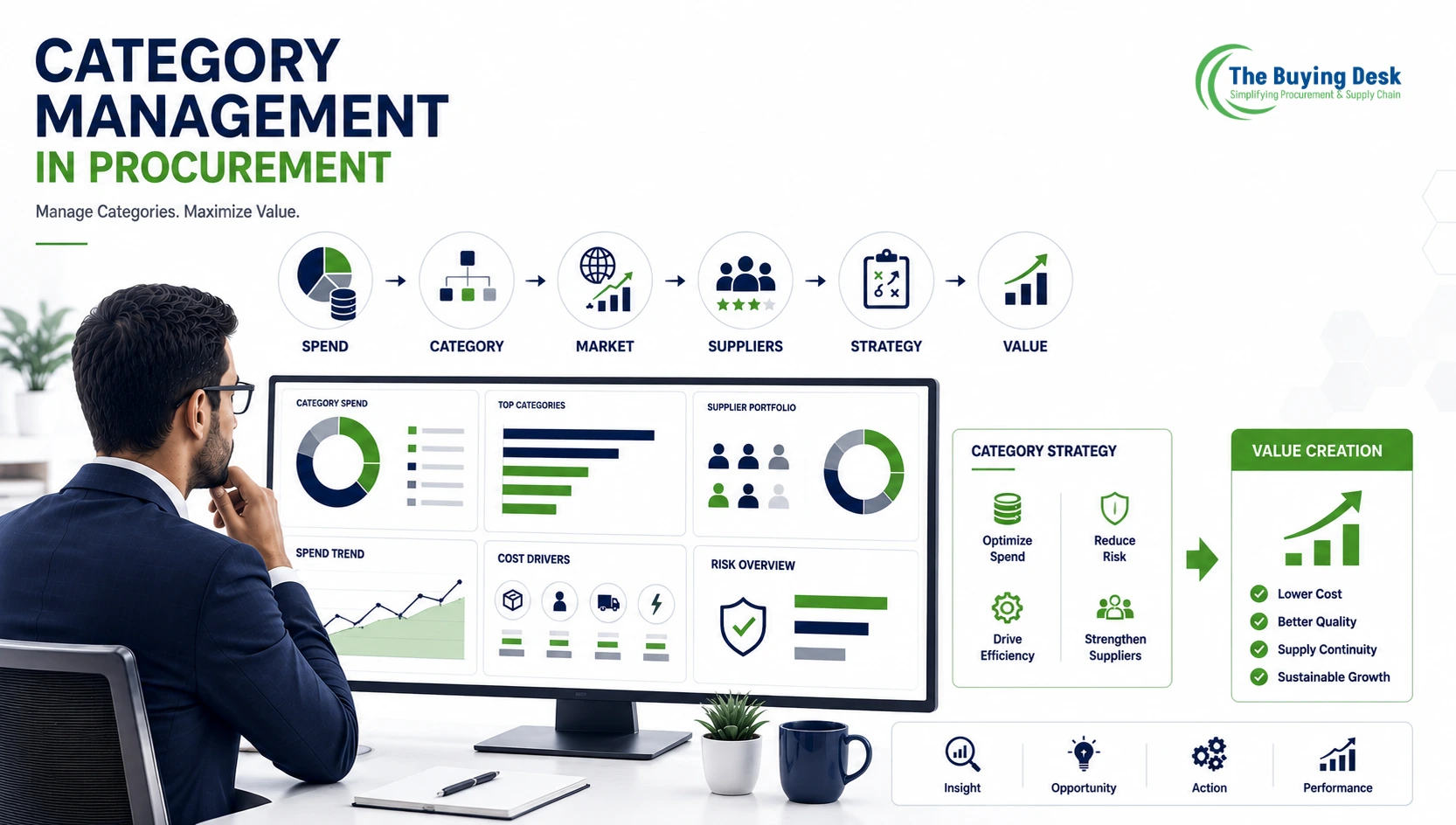
Category management is a strategic approach to managing procurement spend by grouping related products and services into categories and developing a structured strategy for each category.
Instead of treating every purchase as an individual transaction, category management looks at the entire demand, supply market, supplier base, cost structure, business requirements and risks associated with a category.
For procurement teams, this creates a shift from:
“How do we buy this item?”
to:
“How should we manage this entire category to create the best business value?”
Category management is therefore an important bridge between spend analysis and strategic sourcing.
This guide explains what category management is, how it works, the category management process, category strategy development, supplier and market analysis, procurement objectives, KPIs, common challenges and practical examples.
Category management is the systematic process of grouping related goods and services into procurement categories and managing each category through a dedicated strategy based on spend, demand, supply market, suppliers, cost, risk and business requirements.
A simple category management model is:
Spend Data → Category Definition → Analysis → Strategy → Sourcing → Implementation → Performance Management
For example, instead of managing hundreds of individual packaging purchases separately, procurement may establish a broader:
Packaging Category
with subcategories such as:
The category can then be managed strategically across suppliers, plants and business units.
Organizations often purchase similar products or services through different departments, locations and suppliers.
This can create:
Category management provides a structured way to address these issues.
It helps procurement understand:
What are we buying?
How much are we buying?
Who are we buying from?
What does the market look like?
What drives cost?
What risks exist?
What should our sourcing strategy be?
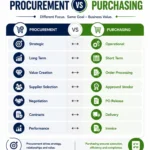
Traditional purchasing is generally transaction-oriented.
A buyer may receive a requirement, obtain a quotation, issue a purchase order and follow up on delivery.
Category management takes a broader perspective.
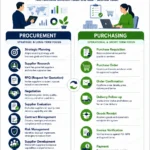
| Traditional Purchasing | Category Management |
|---|---|
| Transaction focused | Strategy focused |
| Individual purchases | Entire category |
| Price oriented | Total value oriented |
| Short-term | Long-term |
| Reactive | Proactive |
| Supplier focused | Market + supplier focused |
| Order execution | Category strategy |
| Immediate requirement | Business and demand planning |
Category management does not replace purchasing.
Instead, it provides the strategic direction that purchasing activities should follow.
Spend analysis is often the starting point.
Spend analysis tells procurement:
Where is the money going?
Category management takes the next step:
How should we manage that spend strategically?
The relationship can be shown as:
Spend Analysis
↓
Category Identification
↓
Category Prioritization
↓
Category Analysis
↓
Category Strategy
↓
Strategic Sourcing
↓
Supplier Selection
↓
Implementation
↓
Performance Management
This makes category management a critical part of the strategic sourcing architecture.
A procurement category is a group of related products or services that can be managed together because they have similarities in areas such as:
For example:
IT Category
→ Hardware
→ Software
→ Cloud Services
→ IT Support
→ Cybersecurity Services
The exact category structure depends on the organization’s business model and procurement strategy.
A category structure normally contains multiple levels.
Direct Spend / Indirect Spend
Packaging
Corrugated Packaging
Corrugated Boxes
Specific box specification or SKU
The hierarchy should be detailed enough to support strategic analysis without becoming unnecessarily complicated.
Categories differ significantly between organizations.
Examples include:
Examples include:
Examples include:
Examples include:
Each category requires a different strategy because the supply market, business impact and risk profile may vary.
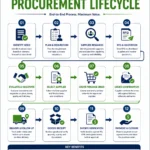
A practical category management process can be represented as:
1. Define Category → 2. Analyze Spend → 3. Understand Demand → 4. Analyze Market → 5. Analyze Suppliers → 6. Assess Cost & Risk → 7. Develop Strategy → 8. Execute Sourcing → 9. Implement → 10. Monitor & Improve
The process is continuous rather than a one-time project.
The first step is determining exactly what belongs within the category.
Procurement should establish:
A poorly defined category can produce incomplete analysis and weak sourcing decisions.
Procurement should understand:
This provides the financial baseline for category strategy.
Category management should not focus only on what the organization currently buys.
Procurement should understand why it buys it.
Demand analysis may examine:
Demand management can sometimes create more value than supplier price negotiation.
Procurement should understand:
Market analysis helps determine the appropriate sourcing approach.
Procurement should evaluate the current supplier base.
Important factors include:
The goal is not automatically to reduce the number of suppliers.
The goal is to determine the right supplier portfolio.
Category managers should understand what drives the cost of the product or service.
Potential cost drivers include:
Understanding cost drivers improves negotiation and sourcing decisions.
Risk assessment should consider both the probability and business impact of supply disruption.
Possible risks include:
High-risk categories may require dual sourcing, safety stock, supplier development or contingency planning.
The category strategy converts analysis into a clear action plan.
A category strategy may define:
Once the strategy is approved, procurement may conduct:
The sourcing event should support the category strategy rather than become the strategy itself.
Category management continues after supplier award.
Procurement must monitor:
This ensures that the category strategy delivers the expected outcome.
A category strategy should answer five fundamental questions:
Understand current spend, suppliers, contracts, costs, demand and risks.
Define the desired commercial and operational outcome.
Understand suppliers, competition, market trends and external cost drivers.
Define the sourcing and supplier strategy.
Define KPIs, targets, ownership and governance.
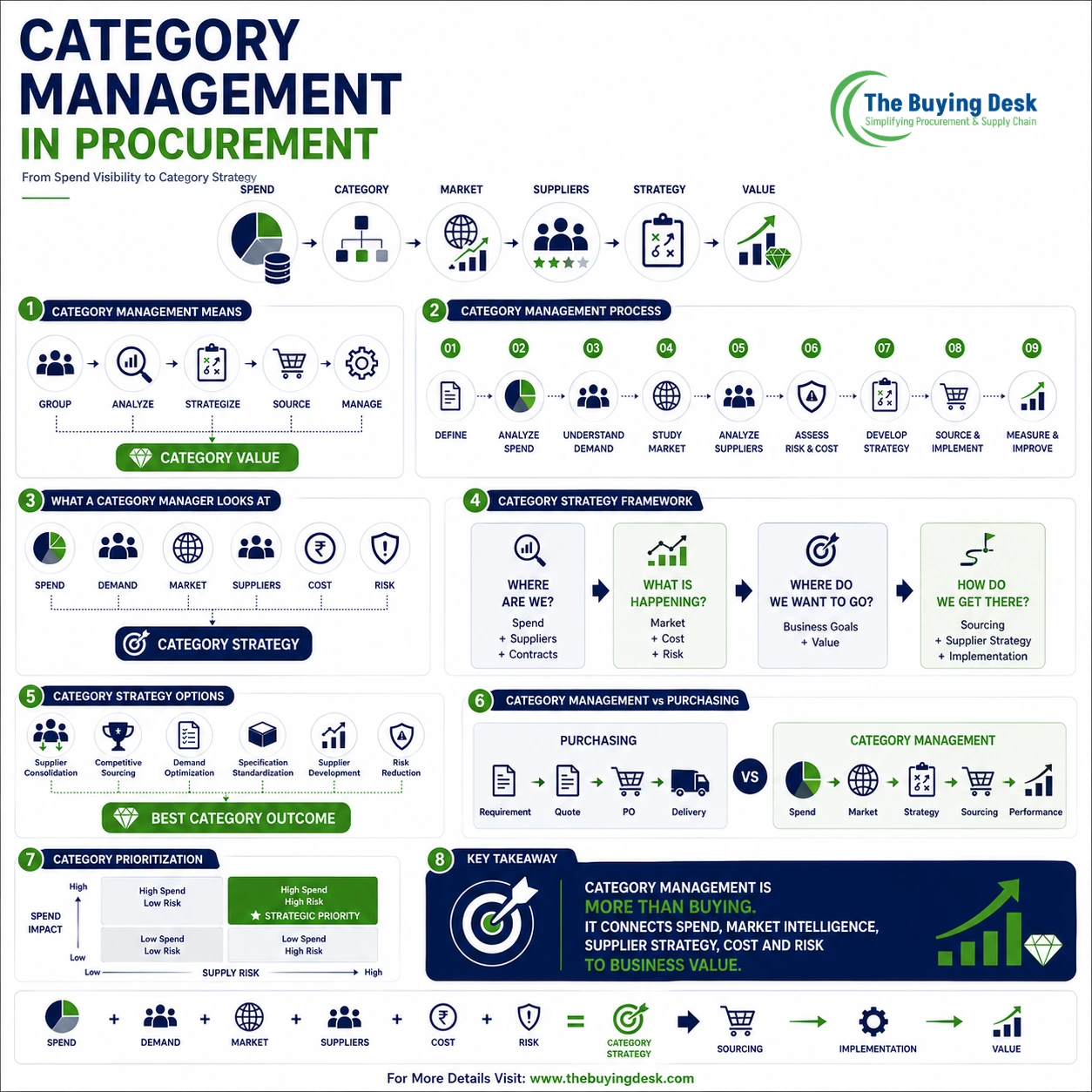
A strong category strategy commonly includes:
The Kraljic purchasing portfolio approach is commonly used as a framework for thinking about procurement categories based on profit impact and supply risk.
It broadly creates four strategic positions.
Low business impact and low supply risk.
Typical approach:
Simplify and automate
High business impact and relatively low supply risk.
Typical approach:
Use competition and purchasing leverage
Lower business impact but higher supply risk.
Typical approach:
Secure supply and reduce dependency
High business impact and high supply risk.
Typical approach:
Build strategic supplier relationships and actively manage risk
The matrix should support judgment rather than replace detailed category analysis.
Not every category requires the same amount of strategic effort.
Procurement can prioritize categories using factors such as:
Spend + Savings Potential + Business Criticality + Supply Risk + Complexity
A high-spend category with strong sourcing potential may be prioritized for an immediate sourcing project.
A low-spend but business-critical category may also receive high attention because of supply risk.
A category opportunity assessment can examine:
Can procurement improve commercial terms?
Can specifications or consumption be improved?
Can fragmented demand be consolidated?
Can additional qualified suppliers be introduced?
Can unnecessary variation be reduced?
Can purchasing and transactional costs be reduced?
Can supplier capability or performance be improved?
Can supply dependency or disruption exposure be reduced?
Category management should not focus only on purchase price.
The relevant question is often:
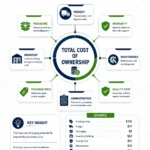
What is the total cost of acquiring, using and managing this product or service?
Total Cost of Ownership can include:
This is especially important for technically complex categories.
Supplier strategy should reflect category requirements.
Possible approaches include:
There is no universal best model.
The appropriate approach depends on:
Cost + Risk + Supply Market + Business Requirements
Supplier consolidation can create benefits such as:
However, excessive consolidation can increase dependency.
Therefore, supplier consolidation should always be evaluated against supply risk.
Sometimes the best category strategy is not to replace a supplier.
It may be to improve the supplier.
Supplier development may focus on:
This can be particularly valuable where supplier switching costs are high.
Category analysis gives procurement a stronger negotiation position.
Before negotiating, the category manager should understand:
This moves negotiation from:
“Can you reduce your price?”
to:
“How can we redesign the commercial relationship to create better total value?”
Risk management should be integrated into the category strategy.
A category risk assessment may consider:
| Risk Area | Example |
|---|---|
| Supplier | Financial instability |
| Supply | Capacity shortage |
| Geographic | Single-country dependency |
| Commercial | Commodity volatility |
| Operational | Long lead time |
| Quality | Critical defect risk |
| Regulatory | Compliance changes |
| Logistics | Transport disruption |
The category strategy should identify appropriate mitigation actions.
Modern category strategies may also consider sustainability requirements such as:
Sustainability requirements should be connected to business objectives and category realities.
Procurement cannot develop an effective category strategy alone.
Key stakeholders may include:
Each stakeholder may have different priorities.
For example:
Engineering → Technical performance
Operations → Continuity and delivery
Finance → Cost and cash flow
Quality → Reliability
Procurement → Commercial value
The category manager must bring these priorities together into a coherent strategy.
Clear governance helps ensure that category strategies are implemented consistently.
Governance may define:
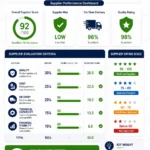
Category management should be measured through a balanced set of KPIs.
Category management should not define success solely through negotiated savings.
Value may also come from:
Therefore:
Procurement Savings ≠ Total Procurement Value
A category strategy should define the value objectives before the sourcing event begins.
Consider a manufacturer spending across several packaging subcategories.
The organization has:
The category manager conducts a spend analysis and identifies opportunities.
Packaging Spend → Multiple Plants → Fragmented Suppliers
The team reviews:
The organization decides to:
The example illustrates how category management connects data, market intelligence and sourcing strategy.
A company may have separate contracts for:
Without category management, different departments may negotiate independently.
A category strategy can evaluate the total technology spend and determine:
The objective is not necessarily to reduce the supplier count.
It is to create the right supplier portfolio and commercial model.
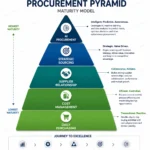
Organizations can think about category management maturity in stages.
Procurement responds to individual requirements.
Procurement understands category spend and suppliers.
Procurement develops category-specific strategies.
Category strategies integrate spend, market, suppliers, cost, risk and stakeholder requirements.
Procurement actively influences business decisions, innovation, resilience, sustainability and long-term value.
Reducing suppliers is not automatically a good strategy.
The objective is the right supplier portfolio.
Cost is important, but category performance also includes risk, quality, delivery and value.
Supplier negotiation cannot compensate for unnecessary demand or excessive specifications.
If related spend is excluded, the category strategy may be incomplete.
A strategy that procurement develops without business involvement may be difficult to implement.
Without supply-market intelligence, procurement may underestimate competition or supply risk.
Category management continues through implementation and performance management.
A category strategy should be measured against actual outcomes.
Use clean and classified procurement data.
Create practical categories aligned with supply markets and business needs.
Analyze what the organization needs and why.
Understand suppliers, competition, cost drivers and market dynamics.
Include supply and commercial risk in category decisions.
Build the strategy with relevant business functions.
Avoid assuming one sourcing model is automatically best.
Translate the category strategy into sourcing projects, contracts and implementation actions.
Measure savings, risk, quality, delivery and other agreed outcomes.
Category conditions change.
The strategy should evolve accordingly.
Before launching a category strategy, procurement should be able to answer:
If these questions cannot be answered, the category strategy may need additional analysis.
Category management and strategic sourcing are closely connected but are not identical.
Category Management provides the broader ongoing strategy for managing a category.
Strategic Sourcing is one of the major execution mechanisms used to improve supplier and commercial outcomes.
The relationship can be visualized as:
Category Strategy
→ Market Analysis
→ Demand Strategy
→ Supplier Strategy
→ Strategic Sourcing
→ Negotiation
→ Contract
→ Supplier Management
→ Performance Improvement
This makes category management a broader and more continuous discipline.
Category management changes procurement from transaction management to category-level strategic management.
Instead of asking only:
“How can we buy this requirement?”
procurement asks:
“How should we manage this category to achieve the best combination of cost, quality, delivery, risk, innovation and business value?”
The complete category management logic is:
DEFINE → ANALYZE → UNDERSTAND → STRATEGIZE → SOURCE → IMPLEMENT → MEASURE → IMPROVE
A strong category strategy combines:
Spend Data + Demand Insight + Market Intelligence + Supplier Strategy + Cost Management + Risk Control + Business Objectives
That is what turns procurement spend into a strategic business capability.
What is category management in procurement?
Category management groups related products and services into categories and manages each category through a dedicated strategy. It considers spend, demand, suppliers, market conditions, cost, risk and business objectives.
Why is category management important?
It gives procurement a broader view of spend instead of managing individual purchases separately. This can improve sourcing decisions, supplier strategy, cost management, risk control and overall value.
What is the difference between category management and strategic sourcing?
Category management is the broader ongoing strategy for managing a procurement category. Strategic sourcing is one of the key activities used to execute that strategy through supplier discovery, RFx, evaluation and selection.
How do you create a category strategy?
Start with spend and demand analysis, then study the supply market, suppliers, cost drivers and risks. Use those insights to define sourcing, supplier, implementation and performance strategies.
What is a procurement category?
A procurement category is a group of related goods or services that can be strategically managed together because they share similar suppliers, markets, requirements, cost drivers or risks.
What are the main benefits of category management?
Key benefits can include improved spend visibility, stronger sourcing strategies, better supplier management, reduced risk, improved contract coverage and opportunities for cost and value improvement.
What KPIs are used in category management?
Common KPIs include savings realization, spend under management, contract coverage, supplier performance, quality, delivery, risk reduction, sourcing cycle time and stakeholder satisfaction.
Is category management only about reducing costs?
No. Cost is one objective, but effective category management also considers quality, delivery, supply continuity, risk, innovation, sustainability and total business value.