Imagine trying to build a house without a plan. Materials arrive late, the wrong items are delivered, costs exceed the budget, and the project is delayed. The result is confusion, wasted money, and dissatisfied customers.
The same principle applies to businesses. Without a structured procurement process, organizations may purchase the wrong materials, choose unreliable suppliers, experience production delays, or pay more than necessary.
This is why successful organizations rely on a well-defined procurement process.
A procurement process provides a standardized framework that guides every purchase—from identifying a business requirement to evaluating supplier performance after delivery. It helps organizations reduce costs, improve quality, ensure compliance, and maintain uninterrupted business operations.
Whether you’re purchasing office supplies, manufacturing raw materials, software licenses, or professional services, following a structured procurement process improves efficiency and reduces risk.
In this comprehensive guide, you’ll learn each stage of the procurement process, understand why every step matters, explore real-world manufacturing examples, and discover best practices used by leading organizations worldwide.
The procurement process is a structured sequence of activities that organizations follow to acquire goods or services efficiently, cost-effectively, and in alignment with business objectives.
It begins by identifying a business need and ends with evaluating supplier performance after the purchase has been completed.
Rather than treating purchasing as a one-time transaction, the procurement process ensures that every buying decision is planned, documented, approved, and continuously improved.
A standardized procurement process helps organizations:
The procurement process is a step-by-step method that organizations use to identify requirements, select suppliers, purchase goods or services, receive deliveries, and evaluate supplier performance.
Many organizations underestimate the value of a structured procurement process until problems arise.
Without a defined process, businesses often experience:
A standardized procurement process helps prevent these issues while creating a repeatable and transparent system for purchasing decisions.
A mature procurement process delivers measurable business value.
Structured supplier evaluation and competitive bidding help organizations negotiate better pricing, reduce waste, and lower the total cost of ownership.
Instead of selecting suppliers based only on price, organizations evaluate quality, delivery capability, technical expertise, financial stability, and long-term partnership potential.
This leads to more reliable supplier relationships.
Clearly defined specifications, supplier qualification, and incoming inspections help ensure purchased materials consistently meet quality standards.
A standardized process encourages supplier risk assessments, contingency planning, and alternative sourcing strategies.
This improves business continuity during disruptions.
Every procurement decision is documented through purchase requisitions, quotations, evaluations, approvals, purchase orders, and supplier performance records.
This improves accountability and audit readiness.
Clearly defined workflows reduce unnecessary delays by ensuring everyone understands their roles and approval responsibilities.
Regular communication, performance reviews, and collaborative improvement initiatives strengthen supplier partnerships over time.
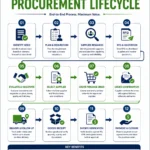
These two terms are often used interchangeably, but they have slightly different meanings.
| Procurement Process | Procurement Lifecycle |
|---|---|
| Focuses on the operational steps involved in purchasing goods or services. | Describes the broader, continuous journey of procurement from planning to supplier development and ongoing improvement. |
| More transactional and workflow-oriented. | More strategic and long-term. |
| Used for day-to-day procurement execution. | Used for procurement strategy and continuous supplier management. |
In practice, both concepts complement each other. The procurement process forms the operational backbone of the broader procurement lifecycle.
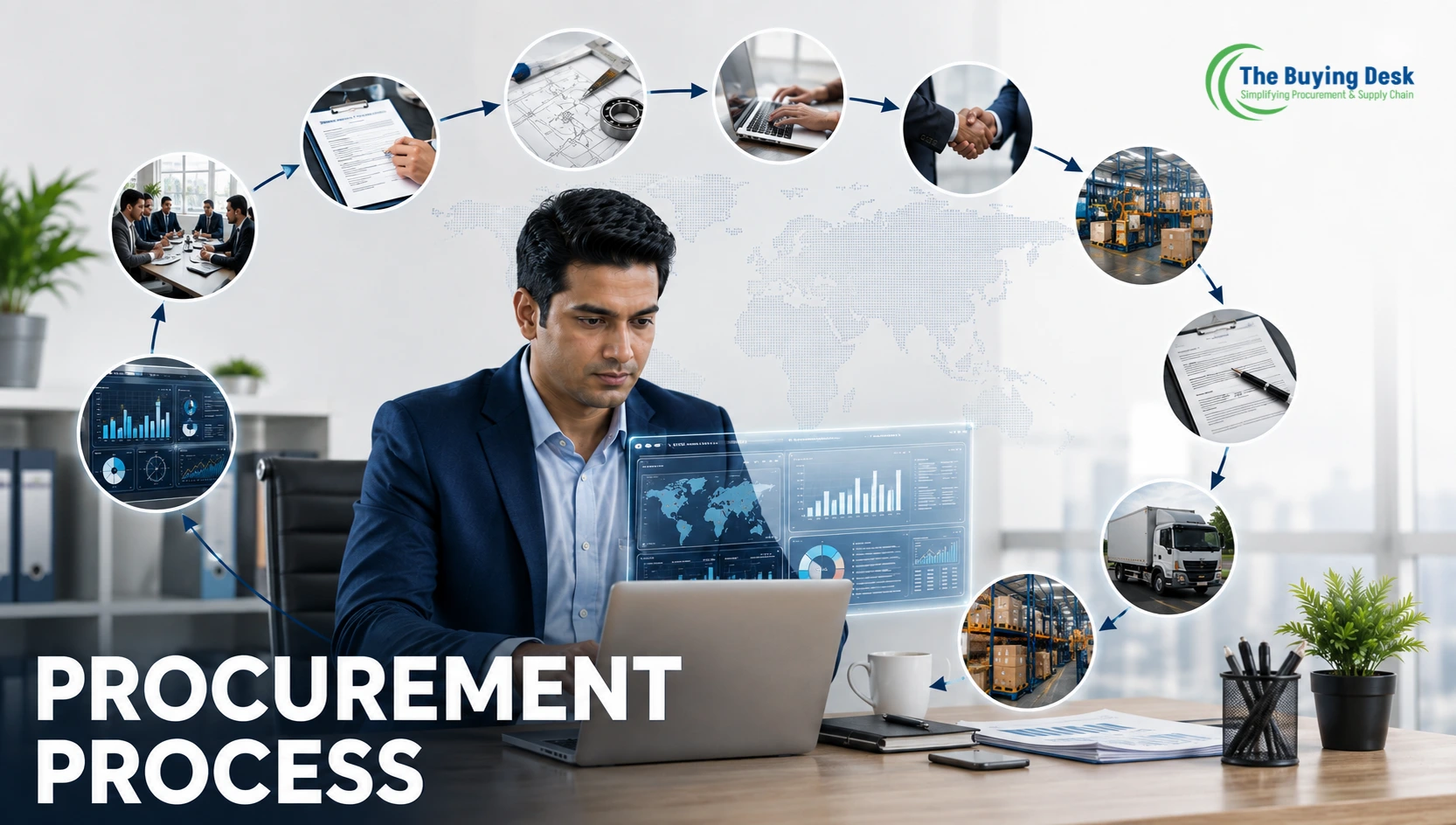
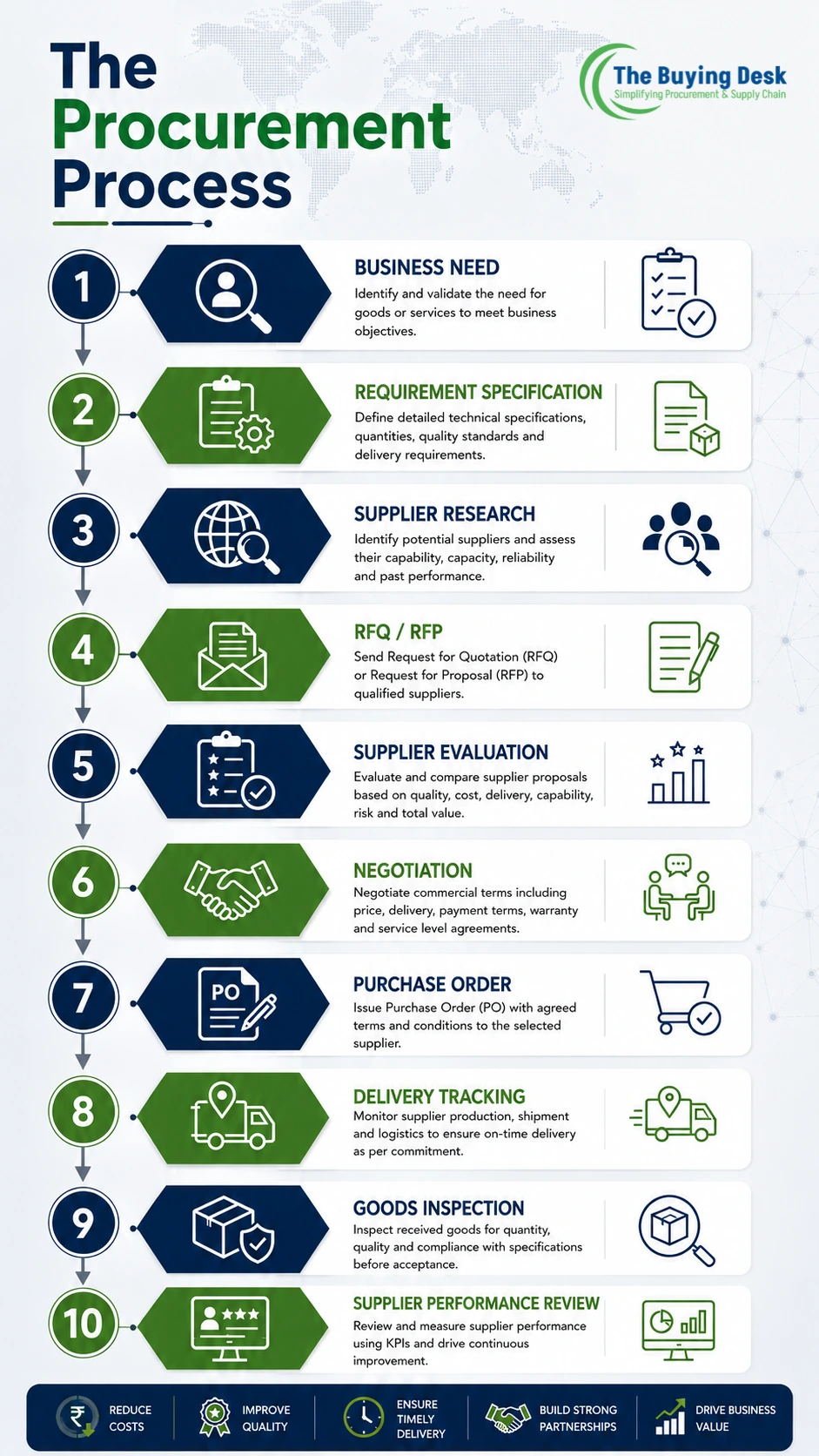
Although every organization may customize its procedures, a standard procurement process generally includes the following ten stages:
| Step | Activity |
|---|---|
| 1 | Identify Business Need |
| 2 | Define Technical Specifications |
| 3 | Research & Shortlist Suppliers |
| 4 | Request Quotations (RFQ/RFP/RFI) |
| 5 | Evaluate Suppliers |
| 6 | Negotiate Commercial Terms |
| 7 | Issue Purchase Order |
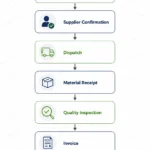
| 8 | Monitor Delivery & Logistics |
| 9 | Receive & Inspect Goods |
| 10 | Evaluate Supplier Performance |
Each of these steps contributes to cost control, quality assurance, and supply continuity.
In the next section, we’ll examine every step in detail with practical examples and best practices.
Let’s consider a company that manufactures ceiling fans.
The production department forecasts demand for the next quarter and determines that it will require:
Instead of immediately placing orders, the procurement team follows a structured process:
By following a disciplined procurement process, the company minimizes production interruptions, maintains product quality, and controls costs.
Many new procurement professionals assume that procurement begins with issuing a purchase order.
In reality, the purchase order is only one stage within a much larger process.
Successful procurement starts long before any order is placed and continues after the goods are received.
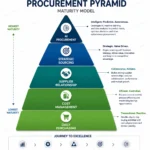
This broader perspective helps organizations move from reactive purchasing to proactive supply chain management.
A successful procurement process follows a structured sequence that minimizes risk, controls costs, and ensures materials or services are available when needed. While organizations may adapt the workflow based on industry or company size, the following ten steps form the foundation of an effective procurement system.
Every procurement activity begins with a clearly identified business requirement.
A department such as Production, Maintenance, Quality, HR, IT, or Marketing identifies a need for goods or services and raises a purchase request.
The procurement team’s first responsibility is not to buy—it is to verify whether the purchase is necessary.
A manufacturing company receives an order for 50,000 ceiling fans. Production planning determines that additional copper wire, ball bearings, plastic housings, packaging boxes, and fasteners are required.
The procurement team verifies current inventory and identifies shortages before initiating the purchasing process.
✔ Validate actual demand before purchasing.
✔ Check inventory levels first.
✔ Confirm budget availability.
✔ Define expected delivery dates.
❌ Purchasing without verifying stock.
❌ Emergency buying due to poor planning.
❌ Unclear requirements.
Once the need is approved, technical specifications must be documented clearly.
Specifications ensure that suppliers understand exactly what the organization expects.
Instead of requesting:
Plastic Component
A proper specification would define:
This level of detail reduces supplier confusion and quotation errors.
✔ Standardize technical drawings.
✔ Involve engineering and quality teams.
✔ Define acceptance criteria.
❌ Vague descriptions.
❌ Missing quality requirements.
❌ Frequent specification changes after RFQ.
With specifications finalized, procurement identifies suppliers capable of meeting technical and commercial requirements.
Three injection molding suppliers submit interest.
Instead of selecting the lowest-cost supplier immediately, procurement evaluates:
✔ Maintain an Approved Vendor List (AVL).
✔ Conduct supplier audits.
✔ Assess business continuity plans.
❌ Selecting suppliers only on price.
❌ Ignoring financial stability.
❌ No backup suppliers.
Qualified suppliers receive detailed procurement documents requesting commercial offers.
Depending on the procurement complexity, organizations may use:
The procurement team requests quotations for:
Annual Demand:
600,000 Plastic Components
Suppliers submit:
✔ Provide identical information to all suppliers.
✔ Define quotation validity.
✔ Specify Incoterms if applicable.
❌ Incomplete RFQs.
❌ Different information shared with different suppliers.
❌ Unclear commercial terms.
Receiving quotations is only the beginning.
The procurement team now compares suppliers using predefined evaluation criteria.
| Criteria | Weight (%) |
|---|---|
| Price | 25 |
| Quality | 25 |
| Delivery | 20 |
| Technical Capability | 10 |
| Capacity | 10 |
| Financial Stability | 5 |
| Sustainability | 5 |
A weighted evaluation helps reduce bias and supports objective decision-making.
✔ Use structured evaluation scorecards.
✔ Include cross-functional teams.
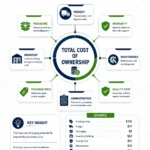
✔ Consider Total Cost of Ownership (TCO).
❌ Choosing the lowest bidder without evaluating long-term value.
❌ Ignoring logistics costs.
❌ Not verifying supplier capacity.
Negotiation aims to create value for both parties—not simply reduce price.
Areas commonly negotiated include:
Instead of requesting only a lower unit price, procurement negotiates:
The overall savings exceed what a simple price reduction would have achieved.
✔ Prepare with market data.
✔ Understand supplier cost drivers.
✔ Focus on long-term partnerships.
❌ Negotiating without preparation.
❌ Damaging supplier relationships.
❌ Focusing only on price.
Once approvals are complete, procurement issues the Purchase Order.
The PO becomes the official document authorizing the supplier to produce or deliver goods.
✔ Verify all details before release.
✔ Obtain necessary approvals.
✔ Send the PO promptly.
❌ Incorrect quantities.
❌ Wrong delivery dates.
❌ Missing commercial terms.
Issuing a PO does not complete procurement’s responsibility.
The team actively tracks supplier progress until the material is received.
Activities include:
A supplier reports a three-day production delay.
Rather than waiting, procurement coordinates with logistics, production planning, and the supplier to expedite shipments and minimize production impact.
✔ Monitor critical suppliers.
✔ Maintain regular communication.
✔ Escalate risks early.
❌ No follow-up after PO release.
❌ Delayed communication.
❌ Poor coordination with logistics.
Upon arrival, the receiving and quality teams verify that the shipment matches the purchase order and technical specifications.
Only conforming materials are accepted into inventory.
✔ Follow documented inspection procedures.
✔ Record non-conformities.
✔ Notify suppliers promptly of defects.
❌ Accepting materials without inspection.
❌ Incomplete receiving records.
❌ Delayed reporting of quality issues.
Procurement continues after delivery by measuring supplier performance and identifying improvement opportunities.
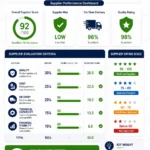
Regular performance reviews strengthen supplier relationships and support future sourcing decisions.
✔ Conduct quarterly or monthly supplier reviews.
✔ Share performance data with suppliers.
✔ Develop improvement plans collaboratively.
❌ Evaluating suppliers only when problems occur.
❌ No formal supplier scorecard.
❌ Failing to recognize high-performing suppliers.
| Stage | Typical Document |
|---|---|
| Requirement | Purchase Requisition (PR) |
| Specification | Technical Specification / Drawing |
| Supplier Invitation | RFQ / RFP / RFI |
| Evaluation | Comparative Statement / Supplier Scorecard |
| Approval | Approval Note / Recommendation |
| Ordering | Purchase Order (PO) |
| Delivery | Delivery Challan / Packing List |
| Receipt | Goods Receipt Note (GRN) |
| Quality | Inspection Report |
| Payment | Supplier Invoice |
| Performance | Supplier KPI Report |
An effective procurement process is a collaborative effort involving multiple departments. Procurement acts as the coordinator, but successful purchasing depends on cross-functional teamwork.
| Department | Primary Responsibility |
|---|---|
| User Department | Identify the requirement and define the business need. |
| Engineering | Prepare technical specifications and drawings. |
| Procurement | Source suppliers, negotiate, and issue Purchase Orders. |
| Quality | Define quality requirements and inspect incoming materials. |
| Finance | Verify budgets, process payments, and maintain financial controls. |
| Logistics | Coordinate transportation, warehousing, and deliveries. |
| Stores | Receive, verify, and store incoming materials. |
| Management | Approve major purchases and procurement strategy. |
When these departments communicate effectively, procurement becomes faster, more transparent, and more reliable.
Organizations establish approval limits to ensure purchases are reviewed at the appropriate level of authority.
| Purchase Value | Approval Authority |
|---|---|
| Up to ₹25,000 | Department Head |
| ₹25,001 – ₹2,00,000 | Procurement Manager |
| ₹2,00,001 – ₹10,00,000 | General Manager |
| Above ₹10,00,000 | Director / CEO |
Note: Approval limits vary by company size, industry, and internal policies. The example above is for illustration only.
A clearly defined approval matrix helps maintain financial discipline, reduces unauthorized purchases, and improves accountability.
A standardized documentation system supports transparency, compliance, and traceability throughout the procurement process.
| Document | Purpose |
|---|---|
| Purchase Requisition (PR) | Internal request for goods or services. |
| Technical Specification | Defines product or service requirements. |
| Request for Quotation (RFQ) | Invites suppliers to submit commercial offers. |
| Comparative Statement | Compares supplier quotations. |
| Purchase Order (PO) | Official order issued to the supplier. |
| Goods Receipt Note (GRN) | Confirms receipt of materials. |
| Inspection Report | Records quality verification results. |
| Supplier Invoice | Basis for payment processing. |
| Supplier Scorecard | Measures supplier performance over time. |
Maintaining complete and accurate records is essential for audits and continuous improvement.
KPIs help organizations measure the effectiveness of their procurement function.
| KPI | Description | Example Target |
|---|---|---|
| On-Time Delivery (OTD) | Percentage of deliveries received on schedule. | ≥ 95% |
| Purchase Order Cycle Time | Time taken from approved requisition to PO issuance. | ≤ 2 days |
| Supplier Defect Rate | Percentage of defective materials received. | < 1% |
| Procurement Cost Savings | Savings achieved through sourcing and negotiation. | Annual target |
| Spend Under Contract | Percentage of procurement covered by negotiated agreements. | ≥ 90% |
| Supplier Lead Time | Average time between PO and delivery. | Category-specific |
| Procurement ROI | Financial value generated relative to procurement costs. | Positive trend |
KPIs should be reviewed regularly and shared with stakeholders to support informed decision-making.
Traditional procurement relied heavily on paper forms, spreadsheets, emails, and manual approvals. Modern organizations increasingly use digital procurement platforms to improve efficiency, visibility, and control.
Digital procurement reduces administrative effort and provides real-time visibility into purchasing activities.
Enterprise Resource Planning (ERP) systems integrate procurement with inventory, finance, production planning, and logistics.
Popular ERP platforms include SAP, Oracle, Microsoft Dynamics, and other enterprise solutions. Many small and medium-sized businesses also use industry-specific ERP systems tailored to their operations.
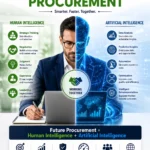
AI is reshaping procurement by helping teams make faster, more informed decisions.
AI categorizes purchasing data, identifies spending patterns, and highlights opportunities for consolidation and savings.
Machine learning models analyze historical consumption, seasonality, and market trends to improve procurement planning.
AI continuously monitors supplier-related information, helping organizations identify potential risks before they disrupt operations.
AI-assisted tools can review contracts, summarize key clauses, identify renewal dates, and flag unusual terms.
AI helps identify potential suppliers based on capabilities, certifications, geographic location, and other selection criteria.
AI-powered assistants can answer routine procurement questions, check PO status, explain policies, and reduce administrative workload.
Important: AI supports procurement professionals—it does not replace the need for judgment, relationship management, or strategic decision-making.
Even mature procurement organizations encounter challenges.
Cause: Multiple approval layers or unclear authority.
Solution: Define approval limits and use automated workflows.
Cause: Missing specifications or unclear requirements.
Solution: Standardized requisition forms and mandatory fields.
Cause: Capacity constraints, logistics issues, or poor planning.
Solution: Regular supplier reviews, contingency planning, and multi-sourcing where appropriate.
Cause: Inaccurate demand forecasting or over-ordering.
Solution: Better forecasting, inventory analysis, and coordination with planning teams.
Cause: Poor planning or unexpected demand.
Solution: Improve forecasting, maintain safety stock for critical items, and review root causes.
Leading organizations consistently apply these practices:
A manufacturing company experiences repeated production stoppages because critical bearings often arrive late.
The procurement team:
This example demonstrates that procurement improvements often come from stronger planning and supplier collaboration rather than simply negotiating lower prices.
What is the procurement process?
The procurement process is a structured sequence of activities organizations follow to acquire goods or services. It starts with identifying a business need and continues through supplier selection, purchasing, delivery, inspection, and supplier performance evaluation.
How many steps are there in the procurement process?
While organizations may customize their procedures, a standard procurement process generally includes ten key steps:
Why is a procurement process important?
A structured procurement process helps organizations reduce costs, improve supplier performance, maintain quality standards, reduce supply chain risks, ensure compliance, and support efficient business operations.
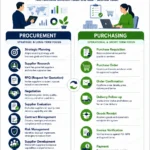
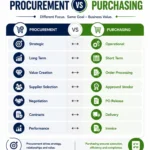
What is the difference between procurement and purchasing?
Procurement is the broader strategic function that includes planning, supplier selection, negotiation, contract management, and supplier evaluation. Purchasing is one activity within procurement that focuses on placing orders and completing transactions.
What documents are commonly used during procurement?
Typical procurement documents include:
What are procurement KPIs?
Procurement KPIs are measurable indicators used to evaluate procurement performance. Common examples include:
What is an RFQ?
An RFQ (Request for Quotation) is a formal document sent to suppliers requesting pricing and commercial details for specified goods or services.
How does procurement reduce business costs?
Procurement reduces costs by:
What industries use procurement?
Almost every industry relies on procurement, including:
Can small businesses benefit from a procurement process?
Yes. Even small businesses can improve cost control, supplier management, budgeting, and operational efficiency by following a structured procurement process.
How does technology improve procurement?
Digital procurement systems automate approvals, manage suppliers, track spending, improve reporting, and reduce manual work. They also enhance visibility across the procurement lifecycle.
Is AI replacing procurement professionals?
No. AI automates repetitive tasks and provides data-driven insights, but procurement professionals remain essential for strategic sourcing, negotiations, supplier relationships, and business decision-making.
A structured procurement process is the foundation of efficient purchasing and resilient supply chains. By following a clear sequence—from identifying requirements to evaluating supplier performance—organizations can improve quality, control costs, reduce risks, and build long-term supplier partnerships.
Procurement is not simply about buying products; it is about making informed decisions that support business strategy and create lasting value.
Organizations that consistently follow a structured procurement process gain more than operational efficiency—they build stronger supplier relationships, improve financial performance, and strengthen their ability to respond to market changes.
Whether you’re a student exploring procurement, a business owner looking to improve purchasing practices, or a procurement professional seeking to refine existing processes, mastering the procurement process is an essential step toward building a more resilient and competitive organization.
Remember, procurement excellence is achieved through disciplined planning, collaboration, data-driven decision-making, and a commitment to continuous improvement.
Explore the next articles in our Procurement Basics series:
Together, these guides provide a structured learning path from procurement fundamentals to advanced sourcing strategies.