A supplier can have a major impact on an organization’s cost, quality, delivery performance and business continuity.
A supplier that consistently delivers the right product at the right quality and price can become a strategic business partner.
A poorly managed supplier, on the other hand, can create:
This is why procurement cannot stop at supplier selection or purchase order placement.
Organizations need a structured approach to managing suppliers throughout their relationship.
That approach is known as Supplier Management.
Supplier management is the systematic process of selecting, onboarding, monitoring, developing, evaluating and managing suppliers to ensure they continue to meet the organization’s commercial, quality, delivery, risk and compliance requirements.
For procurement professionals, supplier management is one of the most important skills to develop after understanding procurement fundamentals.
Supplier management is the structured process of managing supplier relationships and performance throughout the supplier lifecycle.
It covers activities from:
Supplier Identification → Qualification → Selection → Onboarding → Performance Management → Development → Risk Management → Renewal / Exit
The objective is not simply to maintain a list of suppliers.
The objective is to ensure that suppliers consistently support business requirements.
A good supplier management system balances:
Cost + Quality + Delivery + Risk + Compliance + Relationship + Business Value
Suppliers are external organizations, but their performance directly affects internal business performance.
For example:
A supplier delay can stop production.
A supplier quality issue can increase rejection and rework.
A supplier price increase can affect product profitability.
A supplier capacity problem can affect customer delivery.
A financially unstable supplier can create supply continuity risk.
Therefore, supplier management should be treated as a business activity rather than merely a procurement administration task.
These terms are often used interchangeably, but there is a useful distinction.
Supplier management is the broader discipline covering:
Supplier Relationship Management, often called SRM, focuses more strongly on managing the strategic relationship between the organization and important suppliers.
SRM can include:
Therefore:
Supplier Management = Broad supplier lifecycle
SRM = Strategic relationship and collaboration
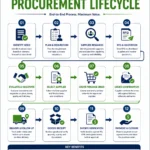
A typical supplier management lifecycle can be represented as:
Identify → Qualify → Select → Onboard → Monitor → Evaluate → Develop → Review → Renew / Exit
Each stage has a different purpose.
The process starts by identifying potential suppliers capable of meeting the requirement.
Sources can include:
At this stage, procurement should focus on finding suppliers that potentially meet the organization’s requirements.
Not every supplier should automatically receive an RFQ.
Pre-qualification helps determine whether a supplier is suitable for further evaluation.
Typical areas include:
A supplier may look commercially attractive but still be unsuitable if it lacks the required capability.
Supplier evaluation should be based on objective criteria.
Typical criteria include:
| Evaluation Area | Example Considerations |
|---|---|
| Cost | Price, total cost, payment terms |
| Quality | Rejection rate, certifications, process capability |
| Delivery | Lead time, OTD, capacity |
| Capability | Technology, equipment, manpower |
| Financial | Stability and business continuity |
| Risk | Dependency, location, capacity |
| Compliance | Legal, ethical and regulatory requirements |
| Service | Responsiveness and communication |
| Innovation | Improvement and development capability |
The weighting should depend on the category.
For a critical safety component, quality and capability may receive greater weight than price.
After evaluation, procurement selects the most suitable supplier or suppliers.
The lowest quotation should not automatically win.
A better question is:
Which supplier provides the best overall value and acceptable risk?
For example:
Supplier A:
Supplier B:
Supplier B may provide significantly greater overall value.
Once a supplier is selected, it must be formally onboarded.
Onboarding may include:
A strong onboarding process reduces future administrative and compliance problems.
After onboarding, supplier performance must be monitored.
Common measures include:
This is where supplier KPIs and scorecards become important.
Suppliers should be reviewed periodically.
Review frequency can depend on supplier criticality.
For example:
Critical Supplier
Monthly or quarterly review
Important Supplier
Quarterly or semi-annual review
Low-Risk Supplier
Annual review
The exact frequency should depend on the organization’s supplier risk model.
Sometimes a supplier is strategically important but does not currently meet expectations.
Instead of immediately replacing the supplier, procurement may work with the supplier to improve performance.
Supplier development can include:
This is particularly important for strategic manufacturing suppliers.
Supplier management should also identify potential risks.
Examples include:
The objective is not to eliminate every risk.
The objective is to understand, prioritize and manage risk.
Not every supplier relationship should continue indefinitely.
Organizations may decide to:
Supplier exit should be controlled to avoid creating unnecessary supply disruption.
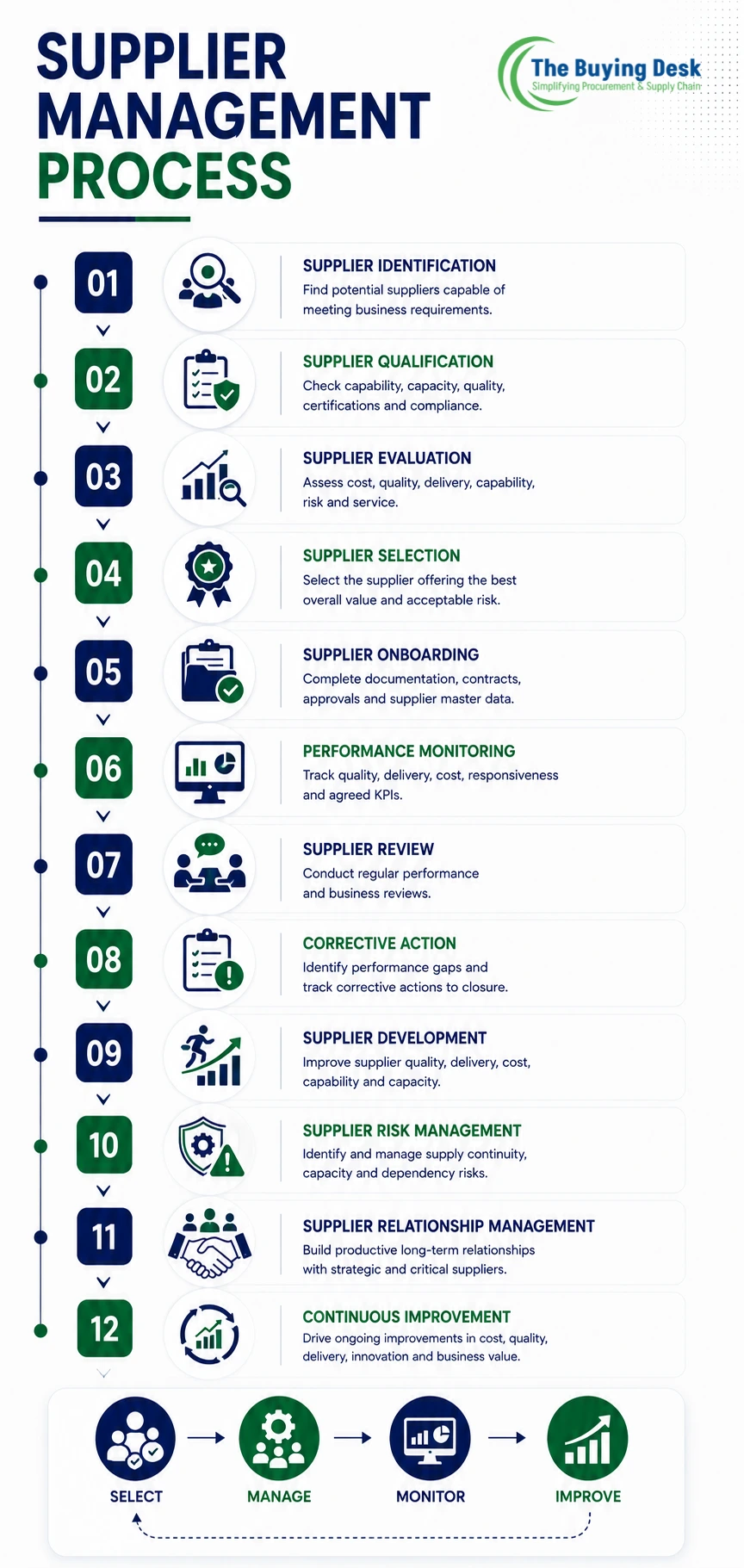
A practical supplier management framework can be organized around six areas:
Not every supplier requires the same level of management.
This is one of the most important principles in supplier management.
A company may have hundreds or thousands of suppliers.
Trying to manage all of them with the same level of effort is inefficient.
Suppliers can be segmented based on:
A simple model can be:
High business impact + high relationship importance.
Require:
High supply risk or operational impact.
Require:
High spend but relatively lower supply risk.
Focus on:
Low spend and low risk.
Focus on:
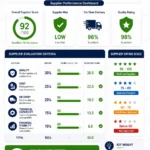
A supplier scorecard is one of the most useful tools in supplier management.
A basic scorecard may include:
| KPI | Weight |
|---|---|
| Quality | 30% |
| Delivery | 25% |
| Cost | 20% |
| Responsiveness | 10% |
| Compliance | 10% |
| Improvement / Innovation | 5% |
The weights should be customized according to the category.
For a highly quality-sensitive component, quality may receive a greater weight.
For a logistics supplier, delivery may carry greater importance.
Suppose Supplier A achieves:
Using the weights above:
Overall Score = 90×30% + 95×25% + 85×20% + 90×10% + 100×10% + 80×5%
The result provides a more balanced view than looking only at price.
This is why supplier scorecards should combine multiple dimensions.
A simple classification could be:
Strong overall performance and low risk.
Acceptable performance but some improvement opportunities.
Performance issues require corrective action.
Persistent poor performance or unacceptable risk.
Organizations should define their own thresholds.
Important supplier management KPIs include:
Measures whether suppliers deliver according to agreed dates.
Can include:
Measures how quickly suppliers respond to:
Measures the time between order placement and delivery.
Measures price competitiveness and cost improvement.
Measures whether supplier corrective actions are completed on time.
Measures whether suppliers follow agreed commercial terms.
Measures exposure to identified supply risks.
Measures dependence on individual suppliers or regions.
Tracks measurable improvements achieved through supplier development.
One of the biggest mistakes organizations make is treating every supplier as equally risky.
Supplier risk should be evaluated based on business impact.
A useful approach is:
Impact × Probability = Risk Priority
For example:
A supplier may have:
Even if the supplier’s current performance is good, the risk exposure may be high.
A single-source supplier is one of the most important areas procurement should monitor.
Single sourcing may be justified because of:
However, procurement should understand the consequences.
Questions to ask:
Supplier development is particularly valuable when replacing a supplier would be difficult or expensive.
A structured supplier development process can be:
Identify Gap
↓
Root Cause Analysis
↓
Corrective Action
↓
Implementation
↓
Verification
↓
Standardization
For example:
Supplier OTD is only 82%.
The objective should not simply be:
“Improve delivery.”
Instead:
Problem: OTD = 82%
Root Cause: Production planning and capacity mismatch
Action: Revised production planning and capacity reservation
Target: OTD > 95%
Verification: Monitor performance for three months
This makes supplier development measurable.
Supplier meetings should have a clear purpose.
A good supplier review meeting may cover:
Every important issue should have:
Action + Owner + Target Date + Status
Supplier management is one of the areas where procurement can demonstrate strategic value.
Traditional purchasing may focus on:
Price → PO → Delivery
Modern procurement looks at:
Supplier Strategy → Cost → Quality → Delivery → Risk → Performance → Development → Long-Term Value
This shift is important for procurement professionals who want to move from transactional purchasing to strategic procurement.
Supplier management becomes especially important in manufacturing.
A manufacturing organization may depend on suppliers for:
A supplier issue can quickly become a production issue.
For example:
Supplier Quality Issue
→ Line Rejection
→ Production Disruption
→ Additional Inspection
→ Rework
→ Higher Cost
→ Customer Delivery Risk
This demonstrates why supplier management should be connected to the broader supply chain.
For direct materials, procurement should typically pay close attention to:
The consequences of poor supplier performance can directly affect production and customers.
For indirect suppliers, the focus may be different.
Examples include:
Important measures can include:
Modern procurement teams increasingly use technology to manage supplier information and performance.
Tools may support:
The technology itself is not the objective.
The objective is better supplier decisions.
Supplier data should be accurate and controlled.
Important supplier information may include:
Poor supplier master data can create:
Therefore, supplier data governance is part of effective supplier management.
Lowest price does not necessarily mean lowest total cost.
Strategic suppliers need more attention than routine suppliers.
A supplier may deliver on time but have poor quality or high costs.
Without consistent measurement, supplier discussions can become subjective.
Identifying a problem without ensuring CAPA closure does not solve the problem.
Some suppliers can significantly improve if procurement actively supports improvement.
Good current performance does not automatically mean low future risk.
Supplier management requires coordination between:
Use risk, spend and business impact to determine management intensity.
Define measurable expectations.
Evaluate suppliers consistently.
Do not wait until a major problem occurs.
Assign owners and deadlines.
Work collaboratively on cost, quality, delivery and innovation.
Identify potential disruptions before they become emergencies.
Ensure supplier information is complete and controlled.
Do not measure KPIs simply because they are easy to measure.
Procurement should work closely with technical, quality, finance and operations teams.
A procurement dashboard could include:
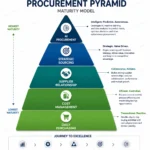
Organizations can evaluate their maturity in five stages.
Supplier management happens mainly when problems occur.
Supplier data and basic KPIs are maintained.
Supplier segmentation, scorecards and regular reviews are established.
Strategic suppliers are actively developed and risk is systematically managed.
Suppliers participate in innovation, joint improvement, long-term planning and value creation.
The goal is not necessarily to make every supplier Level 5.
The goal is to apply the right management approach to the right supplier.
If you want to develop your supplier management capability, focus on:
Understand how suppliers should be evaluated objectively.
Build practical scorecards using quality, delivery, cost and service.
Learn to negotiate while maintaining long-term commercial relationships.
Understand tools such as:
Learn how suppliers build their cost structure.
Ask:
“What happens if this supplier fails?”
Supplier management requires professional but firm communication.
Supplier management knowledge can open career paths in:
This is why supplier management is an important skill for procurement professionals moving toward strategic roles.
Imagine a manufacturing company buys a critical component from Supplier A.
The supplier currently has:
A basic purchasing approach might focus on the competitive price.
A supplier management approach identifies:
Commercial: Good
Delivery: Weak
Quality: Weak
Risk: High
Overall: High-priority supplier
The procurement team can then develop an action plan:
This is the difference between simply buying from a supplier and actively managing the supplier relationship.
Before considering your supplier management process mature, ask:
Supplier management is much more than maintaining a supplier list or following up on delayed deliveries.
It is a structured business discipline that helps organizations manage:
Supplier Capability
Cost
Quality
Delivery
Risk
Compliance
Long-Term Value
The strongest supplier management systems do not treat every supplier the same.
They identify which suppliers are strategically important, which suppliers are risky, which suppliers require development and which suppliers can be managed through simpler processes.
For procurement professionals, supplier management is also an important step toward strategic procurement.
Once you can manage suppliers effectively, you are better positioned to move into:
Strategic Sourcing → Category Management → Supplier Development → Supplier Relationship Management → Procurement Leadership
What is supplier management?
Supplier management is the structured process of selecting, onboarding, monitoring, evaluating, developing and managing suppliers throughout their relationship with an organization.
What are the main objectives of supplier management?
The main objectives are to ensure supplier performance, control cost, maintain quality, achieve reliable delivery, reduce supply risk, maintain compliance and create long-term business value.
What is the supplier management process?
A typical process is:
Identify → Qualify → Evaluate → Select → Onboard → Monitor → Evaluate → Develop → Review → Renew or Exit
What is the difference between supplier management and SRM?
Supplier management covers the broader supplier lifecycle, while Supplier Relationship Management focuses more specifically on strategic supplier relationships, collaboration and long-term value creation.
What are the most important supplier KPIs?
Common KPIs include:
What is a supplier scorecard?
A supplier scorecard is a structured tool used to measure supplier performance across multiple criteria such as quality, delivery, cost, service and compliance.
Why is supplier segmentation important?
Supplier segmentation helps procurement allocate resources according to supplier importance, spend, risk and business impact rather than treating every supplier equally.
What is supplier development?
Supplier development is the structured process of helping suppliers improve capabilities, quality, delivery, cost, capacity or other performance areas.
How often should suppliers be evaluated?
The frequency should depend on supplier criticality and risk. Critical suppliers may require monthly or quarterly reviews, while low-risk suppliers may be reviewed annually.
Can supplier management reduce procurement costs?
Yes. Effective supplier management can identify opportunities for price improvement, cost reduction, process improvement, inventory optimization and total-cost reduction.