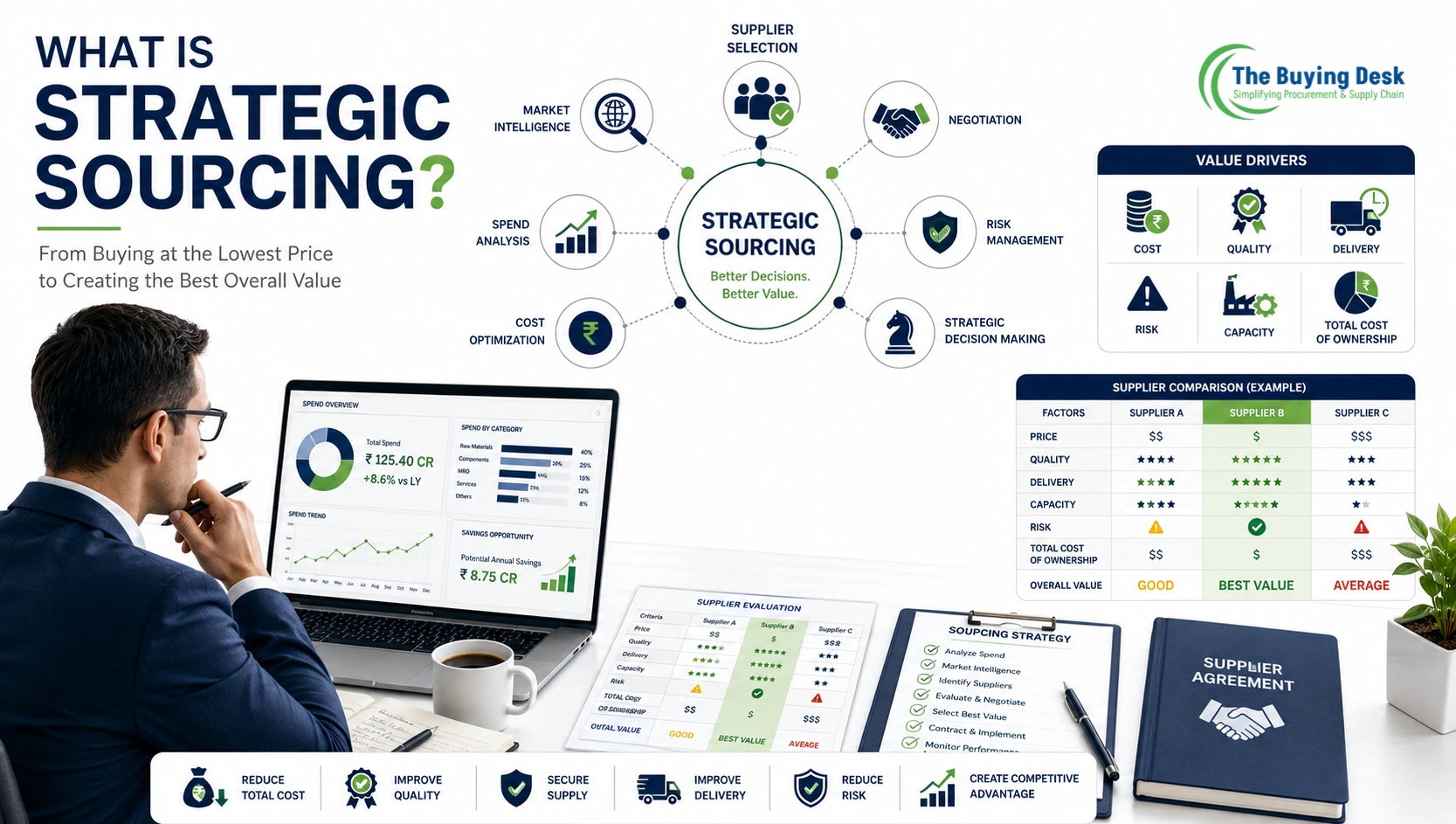
Strategic sourcing is a systematic approach to procurement that focuses on finding the right suppliers, understanding market conditions, analyzing costs, reducing supply risk and creating long-term value for an organization.
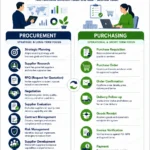
Unlike traditional purchasing, which often focuses on price, purchase orders and immediate requirements, strategic sourcing considers the complete picture: cost, quality, delivery, capacity, supplier capability, risk, technology and Total Cost of Ownership (TCO).
For modern procurement teams, strategic sourcing is not simply about buying at the lowest price. It is about making better sourcing decisions that deliver sustainable business value.
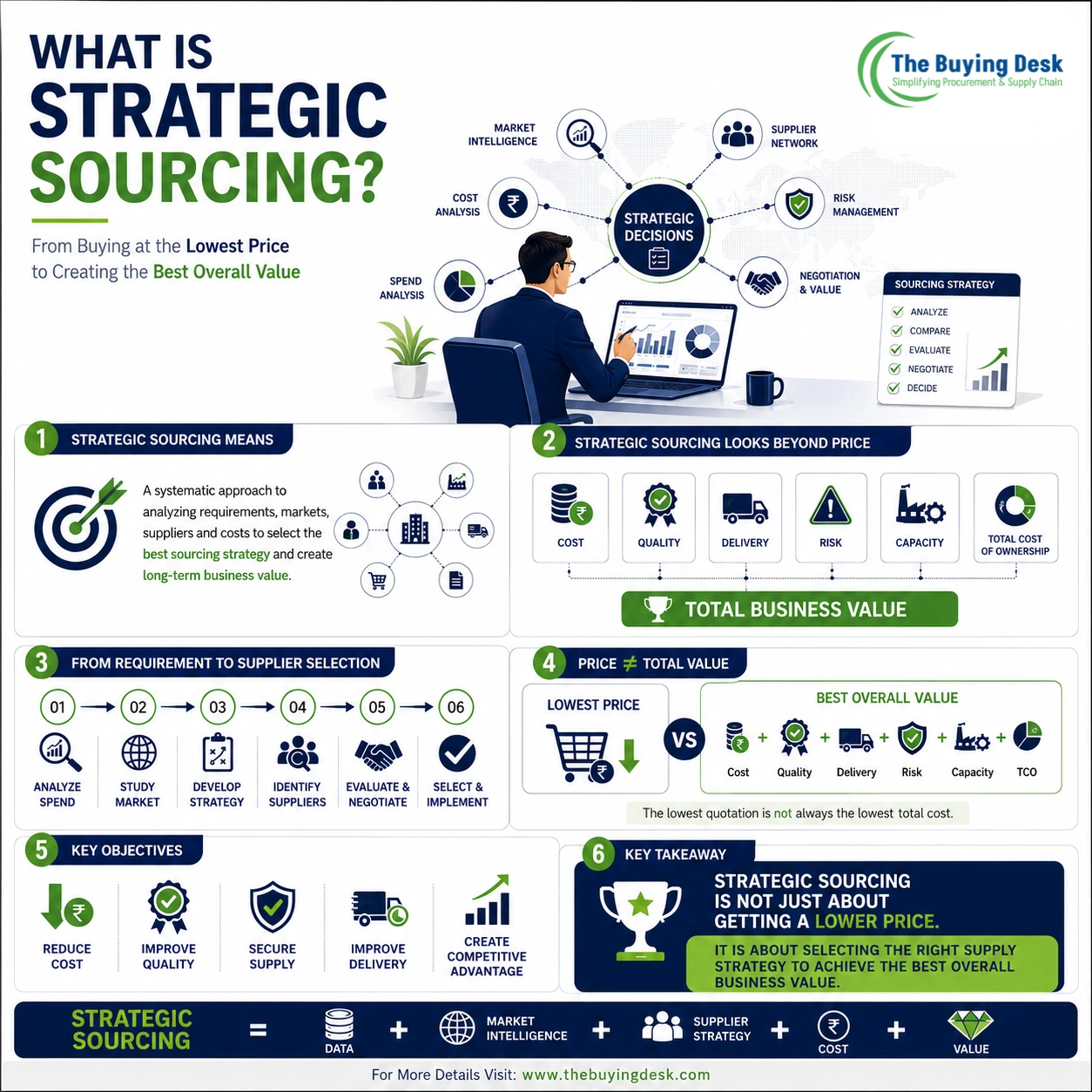
Strategic sourcing is a structured procurement methodology used to analyze an organization’s purchasing requirements, understand supplier and market conditions, identify potential suppliers, evaluate sourcing alternatives, negotiate commercial and operational terms, and select suppliers that provide the best overall value.
In simple terms:
Strategic sourcing means deciding what to buy, from whom to buy, how to buy it and under what commercial and operational conditions to create the best long-term value.
A strategic sourcing decision can evaluate:
This makes strategic sourcing an important bridge between procurement operations and business strategy.
Organizations purchase large volumes of materials, components, services and indirect goods every year. Even a small improvement in sourcing decisions can create significant financial and operational impact.
Consider a company purchasing a component at ₹100 per piece.
If annual consumption is 500,000 pieces:
₹100 × 500,000 = ₹50 million
A 5% improvement would represent:
₹50 million × 5% = ₹2.5 million
However, savings should not be viewed only as a price reduction.
A supplier offering a lower price but poor quality may increase:
Therefore, strategic sourcing seeks to optimize the overall business outcome, not simply the supplier quotation.
One of the biggest misconceptions in procurement is that the best supplier is always the one offering the lowest price.
That is not necessarily true.
Consider two suppliers:
| Factor | Supplier A | Supplier B |
|---|---|---|
| Unit price | ₹100 | ₹95 |
| Freight | ₹5 | ₹12 |
| Rejection rate | 1% | 4% |
| Lead time | 10 days | 25 days |
| Payment terms | 60 days | 30 days |
| Annual capacity | High | Limited |
| Supply risk | Low | Medium |
Supplier B initially appears cheaper.
However, after considering freight, quality losses, inventory requirements, working capital and supply risk, Supplier A may provide the better overall commercial result.
This is why strategic sourcing focuses on value rather than price alone.
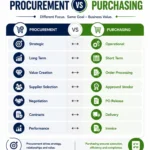
Traditional purchasing is generally transactional.
A typical transaction may look like:
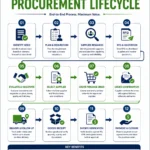
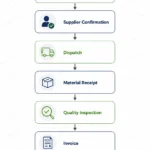
Requirement → RFQ → Quotation → Negotiation → PO → Delivery
Strategic sourcing is broader:
Spend Analysis → Market Analysis → Category Strategy → Supplier Identification → RFx → Evaluation → Negotiation → Supplier Selection → Contract → Performance Management
| Traditional Purchasing | Strategic Sourcing |
|---|---|
| Transaction focused | Strategy focused |
| Primarily price driven | Total-value driven |
| Reactive | Proactive |
| Short-term requirement | Long-term business need |
| PO oriented | Category and sourcing oriented |
| Limited market analysis | Detailed market intelligence |
| Price negotiation | Cost and value optimization |
| Individual transactions | Supplier and category strategy |
| Existing suppliers may dominate | Market alternatives are investigated |
Strategic sourcing does not replace purchasing.
Instead, strategic sourcing determines the sourcing strategy, while purchasing executes the resulting transactions efficiently.
A successful strategic sourcing program generally aims to achieve several objectives simultaneously.
Cost reduction remains an important objective, but procurement should look beyond the quoted unit price.
Potential opportunities include:
A low-cost supplier is not valuable if the supplier consistently produces defective material.
Strategic sourcing therefore considers:
A sourcing strategy should reduce the probability and impact of supply interruptions.
Procurement may evaluate:
Strategic sourcing can improve delivery through:
Procurement can contribute directly to business competitiveness by securing:
Supplier risk can arise from:
Strategic sourcing attempts to identify these risks before they become supply problems.
A successful strategic sourcing program normally includes several interconnected activities.
The first question should be:
Where is the organization spending its money?
Spend analysis helps procurement understand:
Without reliable spend visibility, sourcing decisions can become assumptions rather than data-driven decisions.
Procurement should understand the category before developing a strategy.
Questions may include:
Procurement needs to understand the external supply market.
This may include:
Once internal spend and external market information are understood, procurement can determine the sourcing approach.
Possible strategies include:
Procurement identifies suppliers capable of meeting the organization’s requirements.
Potential sources include:
Depending on the requirement, procurement may use:
An RFI is generally used to understand supplier capabilities.
An RFQ is primarily used to obtain comparable commercial quotations.
An RFP is useful when suppliers need to propose a broader solution.
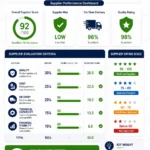
Suppliers should be evaluated against clearly defined criteria.
Typical criteria include:
After supplier evaluation, procurement may negotiate:
Strategic negotiation should be based on data rather than assumptions.
The final supplier should be selected according to the organization’s defined objectives.
The lowest quotation should not automatically win.
Supplier selection should consider the supplier’s overall value proposition and risk profile.
Once a supplier is selected, commercial and operational terms should be formally documented.
These may include:
The basic strategic sourcing process can be summarized as:
1. Define Business Requirement
↓
2. Analyze Spend
↓
3. Analyze Category
↓
4. Study Supplier Market
↓
5. Develop Sourcing Strategy
↓
6. Identify Potential Suppliers
↓
7. Conduct RFI/RFQ/RFP
↓
8. Evaluate Supplier Proposals
↓
9. Negotiate
↓
10. Select Supplier
↓
11. Contract & Implement
↓
12. Monitor Results
The complete process will be covered in detail in Article #22: Strategic Sourcing Process: Step-by-Step Guide.
Strategic sourcing is highly dependent on data quality.
Procurement should ideally have:
Important supplier information includes:
Market analysis may include:
A cost analysis may include:
The better the data, the better the sourcing decision.
Procurement professionals can use several analytical tools.
Used to understand where procurement money is being spent.
Suppliers can be grouped according to:
Procurement can assess:
Strengths → Weaknesses → Opportunities → Threats
The Kraljic approach helps classify purchasing categories based on:
This can help determine an appropriate sourcing strategy.
Should-cost analysis estimates what a product or service should reasonably cost based on its underlying cost structure.
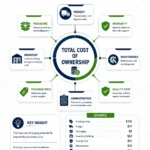
TCO considers costs beyond the purchase price, helping procurement understand the actual economic impact of a sourcing decision.
Supplier prices and performance can be compared with:
Multiple suppliers can be invited to compete for business under defined commercial and technical requirements.
Suppliers compete electronically, generally by improving their commercial offers under predefined rules.
Consider an automotive manufacturer purchasing a machined component.
Annual spend:
100,000 × ₹250 = ₹25,000,000
or:
₹2.5 crore
Procurement identifies five potential suppliers.
Three have the required manufacturing capability.
The team studies:
Three qualified suppliers receive the RFQ.
The suppliers are evaluated on:
The preferred supplier reduces the price from ₹250 to ₹225.
Potential annual purchase-price reduction:
₹25 × 100,000 = ₹2,500,000
or:
₹25 lakh
Procurement also negotiates:
The result is more valuable than a simple ₹25-per-piece price reduction.
This is the essence of strategic sourcing.
A mature strategic sourcing program can deliver benefits across the organization.
Strategic sourcing can fail when procurement focuses on only one dimension.
The lowest quotation is not always the lowest total cost.
Procurement should understand supplier availability and market dynamics before negotiating.
Incomplete or inaccurate spend data can lead to incorrect sourcing decisions.
A low-cost supplier with weak financial or operational capability can create significant future risk.
Different categories require different strategies.
A strategic raw material, office stationery and a critical production component should not necessarily be sourced using the same approach.
Strategic sourcing often requires collaboration between:
Savings are important, but procurement should also monitor:
Strategic sourcing should have measurable outcomes.
Strategic sourcing is especially important in manufacturing because procurement decisions directly affect production continuity.
Manufacturing procurement often needs to consider:
For example, selecting a supplier for a critical machined, forged, cast or injection-moulded component cannot be based solely on quotation price.
The supplier must demonstrate:
Capability + Capacity + Quality + Delivery + Cost + Financial Stability + Risk Control
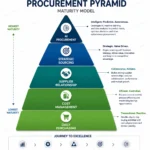
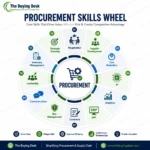
Strategic sourcing changes the role of procurement from a transactional function into a strategic business partner.
A transactional buyer may focus on:
“Get the material delivered at the agreed price.”
A strategic procurement professional asks:
“What is the best supply strategy for this category over the next three to five years?”
This requires:
Before starting a strategic sourcing project, procurement should ask:
What is strategic sourcing?
Strategic sourcing is a structured approach to selecting suppliers and sourcing strategies by analyzing cost, quality, delivery, risk, market conditions and business requirements.
Is strategic sourcing the same as procurement?
No. Procurement is the broader function, while strategic sourcing focuses specifically on analyzing suppliers, markets, costs and sourcing strategies to create long-term value.
Is strategic sourcing only about cost reduction?
No. Cost is important, but strategic sourcing also considers quality, delivery, supply risk, capacity, innovation, sustainability and Total Cost of Ownership.
What is the difference between sourcing and strategic sourcing?
Sourcing involves identifying and obtaining supply sources. Strategic sourcing adds structured analysis of spend, markets, suppliers, costs, risks and long-term business objectives.
Why is spend analysis important in strategic sourcing?
Spend analysis shows where and how much the organization is spending. It helps procurement identify consolidation opportunities, supplier concentration, cost trends and sourcing priorities.
What is the role of supplier evaluation in strategic sourcing?
Supplier evaluation compares potential suppliers against defined commercial, technical, quality, delivery, capacity and risk criteria before the final sourcing decision is made.
Can small businesses use strategic sourcing?
Yes. Small and medium-sized businesses can apply strategic sourcing through supplier comparison, spend consolidation, market research, competitive bidding and total-cost analysis.
What is the main goal of strategic sourcing?
The main goal is to achieve the best overall business value, balancing cost, quality, delivery, risk, supplier capability and long-term organizational requirements.
Strategic sourcing is much more than negotiating a lower purchase price.
It is a structured approach that helps procurement teams understand:
What to buy → How much to buy → Where to source → Which suppliers to consider → How to evaluate them → How to negotiate → Which supplier to select → How to create sustainable value
The most effective strategic sourcing decisions combine data, market intelligence, cost analysis, supplier capability and business strategy.
For procurement professionals, this represents a major shift:
From buying → to sourcing
From price → to total value
From transactions → to strategy
From supplier dependency → to supply-market intelligence
From short-term savings → to sustainable business value
Strategic sourcing therefore becomes one of the most important capabilities for procurement teams that want to move beyond transactional purchasing and contribute directly to organizational competitiveness.